
Updates from the Research Team
Report on the “Wang Wang 旺旺” Animal Rights Protests
by Yunkai Xu, September 2026
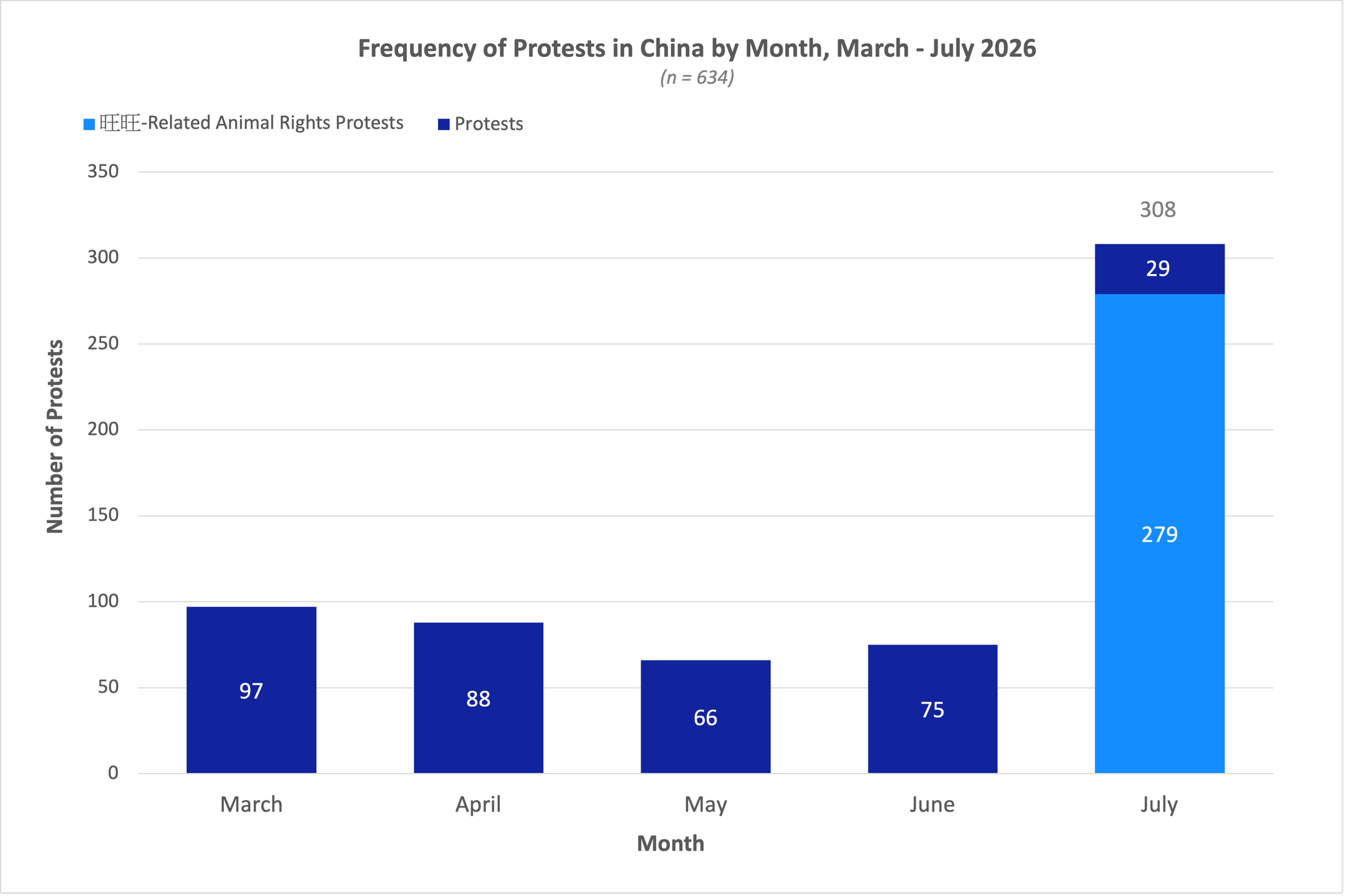
Figure 1: Frequency of Protest in China by Month, March 2026-July 2026 (n=634)
Prepared by Nicholas Tam
The “Wang Wang 旺旺” animal rights protests were sparked by the Wang Wang (旺旺) animal abuse case that occurred on July 28th, 2026, in Jieyang City, Guangdong Province. On July 28th, four underage boys tortured and killed a stray dog named Wang Wang (旺旺) and her three pups in Xinheng town (Lia 2026). A video documenting this brutal act spread online, sparking mass dissent that turned into protests across the country and abroad, including in New York and San Francisco. Across 31 provinces in China, more than 200 protests took the form of either screen projections in public spaces such as malls or flag-raising campaigns. Among all protests, the most frequently used slogans are the hashtags “#Stop animal abuse 停止虐待动物,” and “promote the animal protection legislation 支持动物保护立法.”
The frequency of this protest movement is unprecedented in 2026, as no other protests this year gained such national traction and spread so quickly. In July alone, 279 “Wang Wang 旺旺”- related protests were documented. The high speed and frequency of this movement can be attributed to its online presence. The graphic video of four young boys killing a stray dog was very effective at inciting public anger, and Chinese social media platforms, such as WeChat, Rednote, and Douyin, facilitated the spread of reposts. The nature of this protest movement may also have contributed to its spread. Unlike protests of political nature against the government, animal rights protests are usually confined to the civil level and do not pose a threat to the state. This means that Chinese state authorities may find it unnecessary to completely suppress the case, and once enough mass dissent has accumulated online, the state might find it more costly to repress grassroots protests than to allow their presence and merely limit their media coverage through censorship.
Indeed, the Chinese government’s response to the “Wang Wang 旺旺” animal rights protest movement is limited and mainly utilizes online censorship. Chinese netizens report that “Wang Wang 旺旺”- related content is censored in domestic media, forcing them to seek alternatives in international media. The case is covered only by Hong Kong-based, Taiwanese, and international media, and is censored by news outlets in mainland China. In some cases, state security has been deployed; protestors involved in screen projection have reported police coming to their homes to "have a talk" with them. Despite content censorship, the online impact of the "Wang Wang 旺旺" case is evident in the comment sections of animal-related content on Chinese social media, such as WeChat, Douyin, and Rednote, which are often overwhelmed by "Wang Wang 旺旺"-related comments.
The “Wang Wang 旺旺” animal rights protest movement is rather significant in Chinese society because it demonstrates that, even under heavy censorship and state repression, China’s civil society has strong mobilizing power to protest and voice dissent. The “Wang Wang 旺旺” animal abuse cases have become a symbol of the legal process in China and of the need to legislate animal protection laws. In August 2026, Chinese animal protection communities even reached out to international animal protection organizations and Chinese consulates abroad to push for progress in the Chinese legal system.
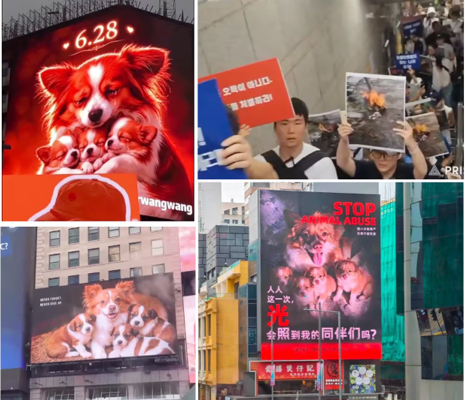
Figure 2: Images of animal rights protests incited by the WangWang 旺旺 incident (created by RFA)